Top 10 Water Softener Systems of 2026: Reviews and Comparisons
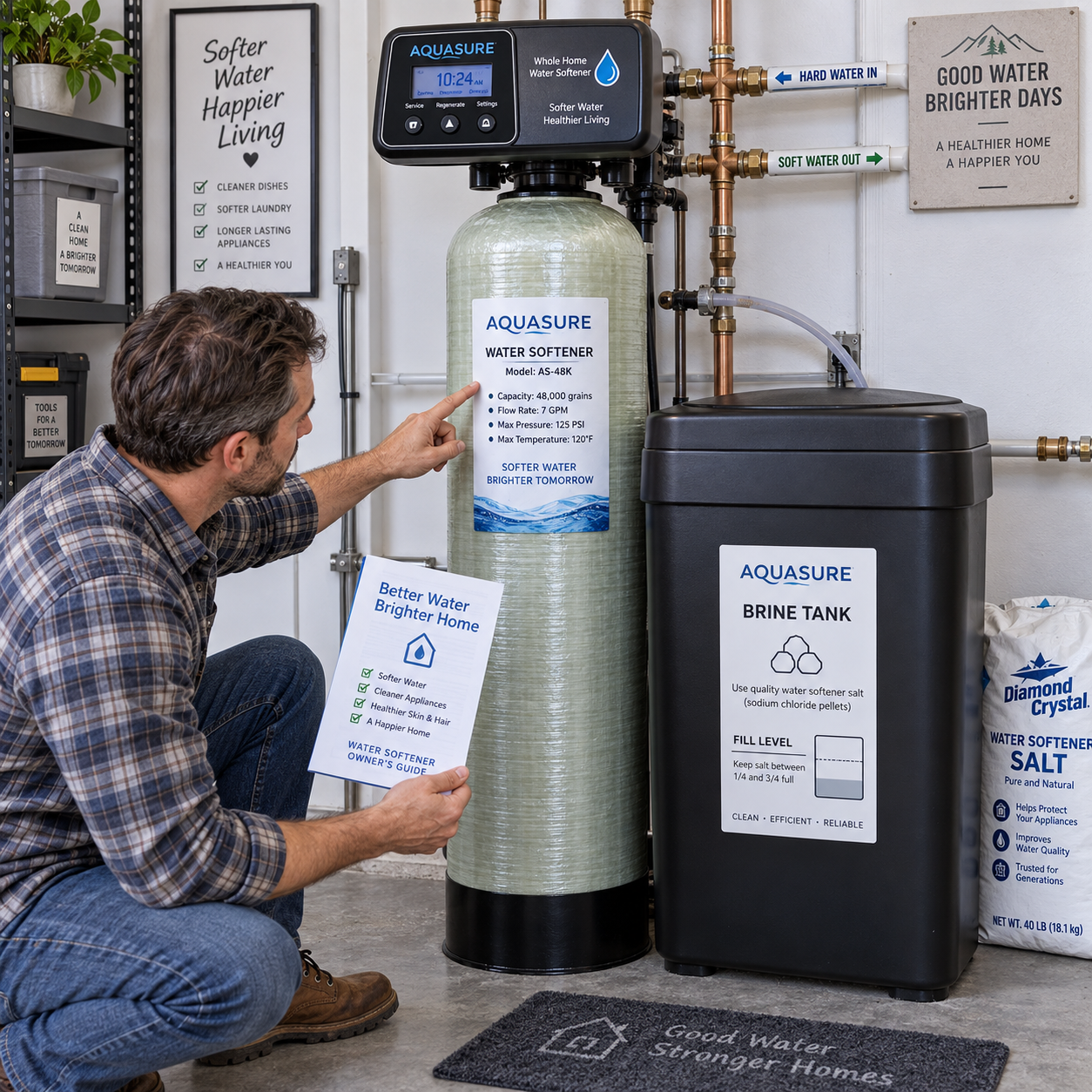
The right water softener depends on your water hardness, household water use, available space, and willingness to handle upkeep. This guide compares ten widely known system lines and configurations by intended fit, core trade-offs, and selection factors; product names and specifications can change, so verify current details with the manufacturer before buying.
How We Compare Water Softener Systems
We compare water softener systems by treatment method, grain capacity, regeneration controls, maintenance, installation needs, and the home each configuration may suit. These criteria help distinguish true ion-exchange softening from salt-free conditioning and avoid treating one capacity as right for every household.
Salt-based systems use ion exchange to reduce calcium and magnesium, the minerals that cause hardness. Their grain capacity indicates how much hardness the resin can remove between regeneration cycles. A larger number is not automatically better: an oversized unit may use more salt and water than needed, while an undersized one may regenerate too often.
We also consider whether a system is sold as a complete package or as a valve-and-tank configuration, how much space it needs, and whether the homeowner must replenish salt or service filter media. The products below are comparison candidates, not a laboratory-tested ranking. Check the exact model’s capacity, flow rate, warranty, included components, and local availability before purchase.
The Top 10 Water Softener Systems of 2026
The ten options below cover common whole-home needs, from compact installations to higher-capacity households. Their fit depends on your water test, plumbing layout, and the exact configuration available; use the product family as a starting point, not a substitute for checking specifications.
- Rheem whole-house water softeners: A familiar retail option for homeowners seeking a packaged system and accessible controls. Compare the model’s rated grain capacity and regeneration settings with your test results. Retail availability and package contents vary.
- Whirlpool whole-house softeners: A practical candidate for buyers who want a conventional salt-based unit with a compact cabinet-style design in some models. Confirm brine-tank access and service support; compact form can limit capacity compared with separate-tank systems.
- AO Smith salt-based softeners: A range worth considering for households comparing packaged systems across different capacities. Match the model to peak use and hardness, and confirm whether installation parts are included or need to be purchased separately.
- GE whole-house softeners: A recognizable option for homeowners comparing retail salt-based systems. Look closely at control features, bypass arrangements, and model-specific capacity rather than relying on brand name alone.
- Clack WS1-based systems: These systems use a widely deployed control-valve platform, often assembled and sold by independent water-treatment dealers. They can offer configuration flexibility, but the complete system, warranty, and service depend on the seller and resin-tank package.
- Fleck 5600SXT-based systems: A common digital-control configuration offered by multiple suppliers. It may suit homeowners who want adjustable regeneration controls, but included resin volume and component quality differ between packages. Compare the full bill of materials.
- Fleck 5810-based systems: A valve platform that appears in systems configured for higher flow or larger treatment needs. It is a candidate for larger homes, subject to correctly sized resin, plumbing, and hardness calculations. Professional sizing matters more than the valve name.
- SpringWell salt-based systems: A branded whole-home option to compare when seeking a complete system package. Verify the current model’s capacity, installation requirements, and warranty terms; a packaged setup may cost more than assembling components through a local dealer.
- Kind Water Systems salt-free conditioners: A possible choice for homes that want scale conditioning without adding salt or removing hardness minerals. It does not produce softened water through ion exchange, so it may not resolve every hard-water symptom.
- US Water Systems salt-free conditioners: Another category option for buyers prioritizing reduced salt handling. Check the specific media and treatment claims against your water chemistry, and understand that conditioning is not equivalent to lowering hardness.
Before ordering any unit, ask for the system’s rated capacity under the stated salt dose and regeneration settings. Those details affect operating cost and performance more than a headline grain number alone.
Water Softener Comparison at a Glance
This comparison groups systems by general type and likely use rather than claiming a universal winner. Exact capacity, included equipment, and maintenance depend on the model and supplier.
| System or line | Type | Potential fit | Key consideration |
|---|---|---|---|
| Rheem whole-house | Salt-based | Packaged-system shoppers | Check model capacity and current package |
| Whirlpool whole-house | Salt-based | Space-conscious installations | Assess capacity and brine-tank access |
| AO Smith salt-based | Salt-based | Households comparing several sizes | Verify components and installation needs |
| GE whole-house | Salt-based | Retail-system comparisons | Review model-specific controls |
| Clack WS1-based | Salt-based configurations | Dealer-supported customization | Seller determines system package |
| Fleck 5600SXT-based | Salt-based configurations | Adjustable control options | Compare resin and included parts |
| Fleck 5810-based | Salt-based configurations | Potentially higher-flow applications | Needs careful professional sizing |
| SpringWell salt-based | Salt-based | Complete-package shoppers | Check terms and current specifications |
| Kind Water Systems | Salt-free conditioner | Salt-free scale conditioning | Does not remove hardness minerals |
| US Water Systems | Salt-free conditioner | Alternative to salt handling | Confirm suitability for water chemistry |
Salt-Based vs. Salt-Free Systems
Salt-based softeners remove hardness minerals through ion exchange, while salt-free conditioners generally treat scale behavior without removing calcium and magnesium. Choose based on the result you need: softened water or a salt-free approach to managing scale.
In a salt-based system, resin beads exchange sodium or, in some setups, potassium ions for calcium and magnesium. The unit periodically runs a regeneration cycle that flushes the resin with brine and sends wastewater to a drain. This reduces hardness, but requires salt replenishment, drainage, and a suitable plumbing connection. People on sodium-restricted diets may want to discuss drinking-water options with a healthcare professional.
Salt-free conditioners use different media or processes intended to reduce mineral scale formation. They typically avoid brine discharge and salt loading, but they do not make hard water soft in the ion-exchange sense. Soap feel, mineral content, and some appliance effects may therefore differ. Neither category is a universal fix for contaminants such as bacteria, lead, or arsenic; those require treatment selected for the specific contaminant.
How to Choose the Right System for Your Home
Choose a system by measuring hardness, estimating daily demand, and matching those figures to capacity, flow, space, and budget. A household’s headcount is only a starting point; bathrooms, simultaneous use, and water chemistry also matter.
- Test the water. Use a reliable test or a certified laboratory, especially if you have a private well. Hardness is often reported in grains per gallon (gpg) or milligrams per liter. Also check iron and other minerals, because they can affect treatment and maintenance.
- Estimate demand. Consider the number of occupants and typical daily use, then account for peak flow. A system must handle household flow without an excessive pressure drop.
- Compare capacity and regeneration. Use the manufacturer’s capacity at its stated operating salt dose, not just the largest advertised grain rating. Demand-initiated controls can base regeneration on water use; timer-based controls follow a schedule. Ask how each model is configured.
- Check the installation site. Salt-based units need room for the tank or cabinet, a drain, a power source if required, and access for salt delivery. Confirm the bypass valve and placement relative to the water heater and fixtures.
- Set a realistic budget. Include purchase, installation, salt, water use during regeneration, filters if applicable, and future service. A lower upfront price may be offset by costly plumbing work or hard-to-find parts.
A useful decision rule: if you need lower mineral hardness throughout the home, compare correctly sized ion-exchange systems. If avoiding salt and brine discharge matters more and scale reduction is the primary goal, investigate conditioners while accepting that the water remains hard.
Installation and Ongoing Maintenance
Installation requires a suitable plumbing connection, a safe drain route for regeneration wastewater, and enough room to operate and service the unit. Maintenance then depends on system type: salt-based models need salt and periodic checks, while conditioners need media care according to their manufacturer.
Before installation, confirm local plumbing requirements and whether a permit or licensed plumber is needed. The bypass valve should be reachable, and the drain line must follow the manufacturer’s air-gap and routing instructions. Incorrect drain connections can create contamination risks or prevent proper regeneration. A professional installer can also check water pressure, flow, and any prefiltration needs.
For a salt-based softener, inspect the brine tank regularly and refill salt when the level approaches the manufacturer’s minimum. Avoid letting a salt bridge or crust hide an empty space above the water. Check for leaks, confirm the control valve settings, and keep a record of salt use and regeneration behavior. Unusual salt consumption or a return of hard-water symptoms can indicate a settings, resin, or water-quality issue.
Salt-free systems have no salt to replenish, but their media may need replacement or service on a schedule that varies by product and water conditions. Follow the exact manual rather than assuming all media lasts the same amount of time.
Frequently Asked Questions
These answers cover common sizing, testing, and maintenance questions, but a water test and the product manual should guide final decisions.
What size water softener does a household need?
Size a water softener using measured hardness, estimated daily water use, and peak flow. Household size offers a rough starting point, but a water test and the manufacturer’s capacity calculations provide a better match. Avoid choosing solely by the largest grain-capacity label.
How do I know if my home has hard water?
White scale on faucets, spots on dishes, and soap that lathers poorly can suggest hard water, but they do not confirm its level. Test a sample or review a local water-quality report; private wells should be tested directly.
Are salt-free systems water softeners?
Most salt-free products are conditioners, not ion-exchange water softeners. They may help manage scale, but they generally do not remove calcium and magnesium or provide the same softened-water result.
How often does a water softener need maintenance?
Check a salt-based system routinely and refill salt as needed; the interval depends on water hardness, use, and settings. Inspect for leaks and abnormal regeneration, and follow the manufacturer’s schedule for cleaning or service. Salt-free media upkeep varies by product.