How Water Softeners May Affect Your Skin and Hair
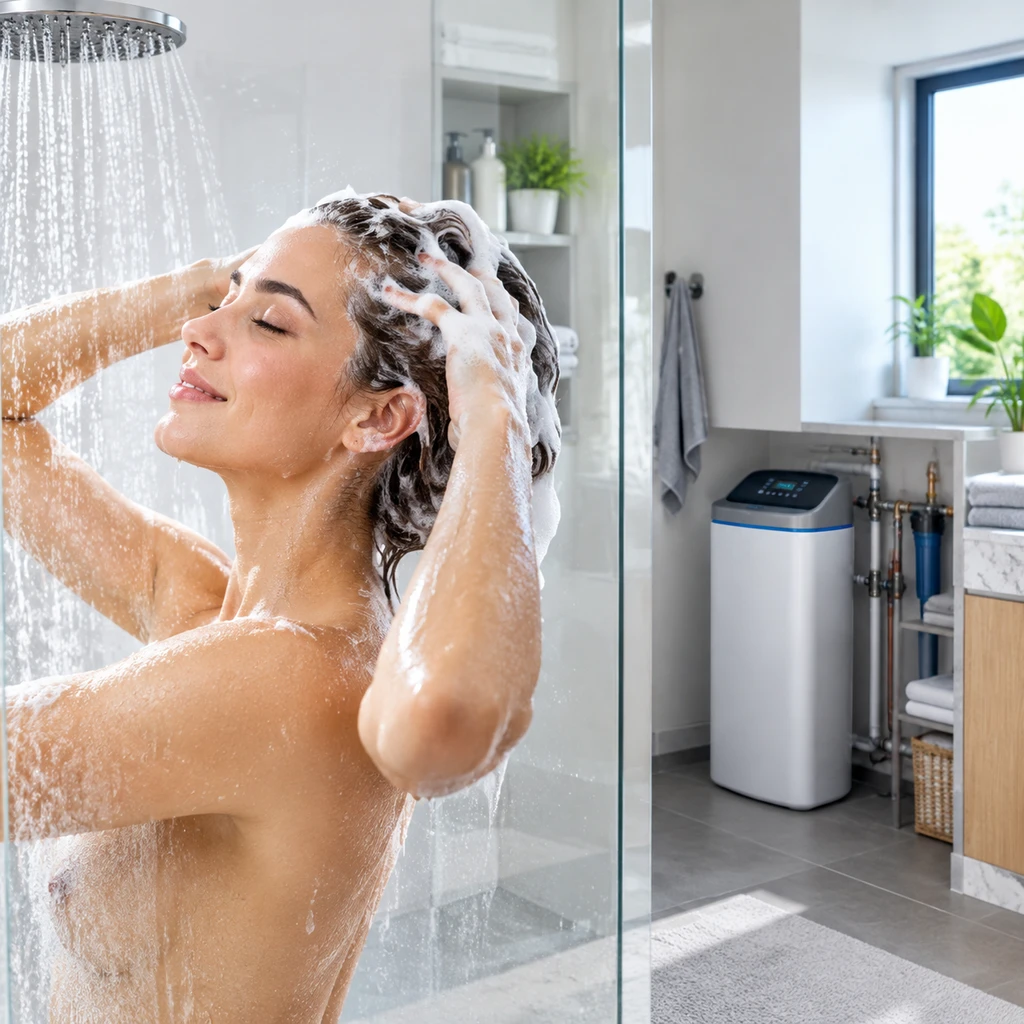
If your skin feels tight after a shower or your hair seems harder to rinse, water hardness may be one factor. Hard water contains dissolved minerals that can interact with soap and shampoo; a water softener reduces those minerals and may change how bathing products lather and rinse.
The difference is noticeable for some households, but it is not a guaranteed fix for dryness, frizz, or a skin condition. Your products, bathing habits, and individual skin and hair also matter. Here is what softened water can realistically change, and how to assess it in your own routine.
What makes water hard or soft?
Hard water contains higher levels of dissolved calcium and magnesium, while soft water contains much less of these hardness minerals. A conventional water softener reduces calcium and magnesium through ion exchange, typically replacing them with sodium or potassium ions.
Water hardness is usually reported as grains per gallon or milligrams per liter (mg/L) of calcium carbonate. The U.S. Geological Survey classifies water with more than 120 mg/L as hard and more than 180 mg/L as very hard, though local providers may use different categories. A water test or your utility’s water-quality report can help establish what is coming from the tap.
Softening changes the water’s mineral content; it does not mean the water is distilled or free of every dissolved substance. A softener also does not automatically remove contaminants such as bacteria or many chemicals. Its main household purpose is to reduce hardness, which can limit mineral scale and affect how soap behaves.
How hard water can affect skin and hair
Hard water can leave some people feeling as though soap or shampoo is harder to rinse away, and some report dry-feeling skin or dull, less manageable hair. These experiences vary, and hard water alone cannot diagnose the cause of a skin or hair concern.
Calcium and magnesium can react with certain soaps and form insoluble residue, sometimes called soap scum. Mineral deposits can also collect on shower surfaces. On skin or hair, residue may contribute to a coated or less-clean feeling, especially when a product is difficult to rinse out. The result depends on water chemistry, the specific cleanser, how much you use, and how long you rinse.
People often describe hair washed in hard water as rough, weighed down, or less shiny. Others notice little difference. Hair texture, color treatments, scalp oils, styling products, and shampoo choice can all affect how hair feels, so water hardness is only one possible influence.
Skin dryness can also have many causes, including cold weather, hot or long showers, frequent washing, and the use of irritating products. If irritation persists, worsens, or comes with a rash, consult a qualified health professional rather than assuming water hardness is responsible.
What may change when you use softened water?
With softened water, soap and shampoo may lather more readily and rinse differently because there are fewer calcium and magnesium ions to interfere with them. Some people find their skin feels less coated and their hair easier to manage, but results are personal rather than guaranteed.
You may notice the change quickly at the tap: a smaller amount of soap can produce more foam, and rinsing may feel different. Soft water can leave skin feeling unusually slick to someone accustomed to hard water. That sensation does not necessarily mean soap remains on the skin; it may take time to recognize the difference.
Hair may feel softer or more slippery while wet, and some people find it detangles more easily. Others feel that their hair is limp or that their usual shampoo leaves too much product behind. If your hair feels coated, consider whether you are using the same amount of shampoo as before, whether the product suits your hair type, and whether you are rinsing thoroughly.
Softened water is not a treatment for every cause of dry skin or damaged hair. It changes one part of the washing environment, not your skin barrier, hair structure, or underlying health.
What a water softener can—and cannot—do
A water softener can reduce water hardness and may make bathing products easier to lather and rinse. It cannot promise smoother skin, repair damaged hair, or treat medical conditions such as eczema.
Think of a softener as a water-quality adjustment, not a personal-care product. Its likely value depends on how hard your water is and whether mineral-related residue is affecting your household. If your water is already soft, installing a system for skin or hair benefits alone may make little practical difference.
Softened water also does not replace moisturizer, sunscreen, appropriate shampoo, or medical advice. If you have eczema, persistent itching, a scalp condition, or unexplained hair loss, a clinician can help identify causes and recommend care. A water softener may be one environmental change to discuss, but it is not a cure.
There can be household trade-offs, too. Ion-exchange softeners add sodium or potassium to the treated water as they remove hardness minerals. If you have a medically prescribed sodium restriction, ask your healthcare professional whether softened water for drinking and cooking is appropriate. Some homes use a separate unsoftened tap for drinking water. Check the unit’s specifications and follow local plumbing guidance.
Adjusting your skin and hair routine
After installing a softener, adjust your skin-care and hair-care routine gradually: start with less product, rinse as usual, and observe how your skin and hair feel over a few weeks. Changing one variable at a time makes it easier to tell whether the water or a product change is affecting the result.
- Use less cleanser at first. Soft water may increase lather, so try reducing your usual amount rather than automatically applying the same dose.
- Rinse thoroughly. A slippery sensation can feel unfamiliar. Give shampoo and body wash time to rinse away, especially around the hairline and skin folds.
- Keep other habits steady. Avoid changing shampoo, conditioner, shower temperature, and moisturizer all at once. Otherwise, it is difficult to identify what made a difference.
- Track what you notice. For two or three weeks, note skin tightness, scalp comfort, hair manageability, and how much product you use. A simple record is more useful than judging by one shower.
- Choose products for your needs. If your skin remains dry, use a suitable moisturizer and consider shorter, lukewarm showers. If hair feels weighed down, review product amount and buildup before adding a clarifying product.
Do not keep reducing shampoo if your scalp or hair is not getting clean, and do not scrub harder to compensate for a new rinse feel. Routine changes should improve comfort, not create irritation.
Choosing and maintaining a softener for household use
Choose a water softener based on measured hardness, household water use, and the system’s capacity, then maintain it according to the manufacturer’s instructions. Correct sizing and upkeep help the unit treat water consistently; they do not guarantee a particular skin or hair result.
Before buying, confirm hardness with a reliable test and ask whether the reading reflects the water entering your home. Compare systems by capacity, regeneration method, salt or potassium requirements, installation needs, and ongoing maintenance. A unit that is too small may regenerate frequently, while an oversized or poorly maintained system may add cost without a useful benefit.
Keep the brine tank supplied with the recommended salt or potassium chloride, check for salt bridging or buildup, and follow the schedule for cleaning and service. If treated water suddenly feels different, check the system settings and salt supply, and consider retesting hardness. For installation or plumbing questions, use a qualified professional familiar with local requirements.
Frequently asked questions
Can softened water make hair feel different?
Yes. It can change how shampoo lathers and rinses, so hair may feel softer, more slippery, or easier to manage. Some people instead notice limpness or product buildup. The response depends on hair type, products, water hardness, and rinsing habits.
Is softened water suitable for everyday bathing?
For most people, softened water is suitable for everyday bathing. It changes water hardness but does not replace a safe water supply or good hygiene. If you have a specific medical concern or a restriction related to sodium or potassium, ask a healthcare professional about your circumstances.
Do you need less soap or shampoo with softened water?
You may need less to get the lather you are used to, so start with a smaller amount and adjust based on how clean your skin and hair feel. There is no single reduction that applies to everyone or every product.
Can a water softener treat skin conditions?
No. A water softener is not a medical treatment and cannot cure eczema or other skin conditions. It may change bathing conditions for some people, but persistent symptoms should be assessed by a healthcare professional.