How Hard Water Affects Your Plumbing and Appliances
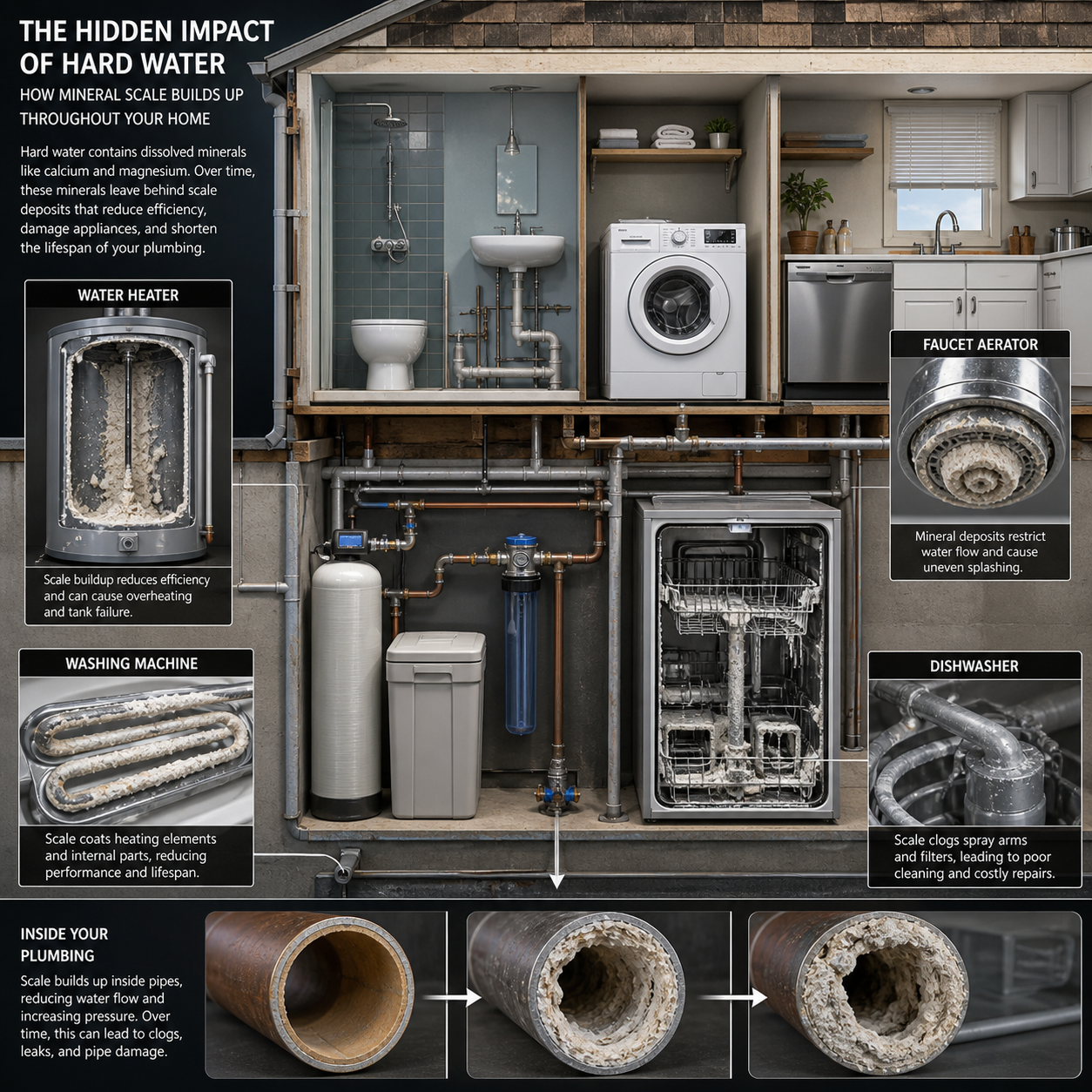
Hard water can gradually affect the plumbing pipes, fixtures, water heater, and appliances throughout your home. The main issue is scale buildup: dissolved minerals leave deposits on surfaces, inside valves, heating elements, and narrow water passages.
These effects usually develop slowly rather than causing an immediate emergency. However, persistent deposits can reduce water flow, increase cleaning and maintenance, and make water-using appliances work harder. Understanding the difference between mineral scale, corrosion, and ordinary wear helps you choose the right response.
What Is Hard Water?
Hard water contains elevated levels of dissolved calcium and magnesium. When this water is heated or evaporates, the minerals can come out of solution and form a solid deposit called limescale.
Water hardness varies by location and water source. Groundwater often dissolves minerals as it moves through limestone, chalk, or other rock. A laboratory test or local water-quality report can show hardness, commonly expressed as milligrams per liter of calcium carbonate or as grains per gallon.
Calcium and magnesium are not the same as dirt or sediment. They remain invisible while dissolved, then become noticeable when they collect on a faucet aerator, showerhead, heating element, or appliance interior. The resulting scale may feel chalky and appear white, gray, or slightly yellow.
Hard water does not automatically mean that a home has unsafe water or that every pipe will fail. The concern for plumbing and appliances is operational: mineral deposits occupy space, interfere with moving parts, and reduce heat transfer.
How Hard Water Affects Plumbing Pipes and Fixtures
Hard water affects plumbing by allowing limescale to accumulate inside pipes, valves, aerators, showerheads, and faucets. Over time, scale can narrow water passages and make fixtures harder to operate or maintain.
Older galvanized steel pipes are particularly vulnerable to restricted flow because their interiors may already contain corrosion products and rough surfaces that capture mineral deposits. Copper and plastic plumbing pipes do not usually become coated at the same rate, but their fittings, valves, screens, and narrow passages can still collect scale.
Common plumbing effects
- Reduced water flow: Deposits gradually narrow the opening inside a pipe, valve, or fixture. A shower may feel weaker even when the pump or municipal supply has not changed.
- Clogged aerators: Faucet screens trap small pieces of limescale. Removing and soaking the aerator may restore flow if the restriction is localized.
- Stiff or leaking fixtures: Mineral deposits can interfere with cartridge valves, shutoff valves, and faucet handles. A worn seal still needs replacement; descaling cannot repair every leak.
- Showerhead blockage: Small spray holes collect scale, producing uneven jets or a reduced spray pattern.
- More frequent maintenance: Plumbers may need to clean screens, replace cartridges, flush components, or investigate low pressure more often.
Scale buildup is different from corrosion. Corrosion attacks or changes the pipe material, while limescale forms a mineral layer on a surface. They can occur together, especially in older systems, so persistent low pressure or repeated leaks deserve professional diagnosis rather than an assumption that hard water is the only cause.
The Impact on Water Heaters
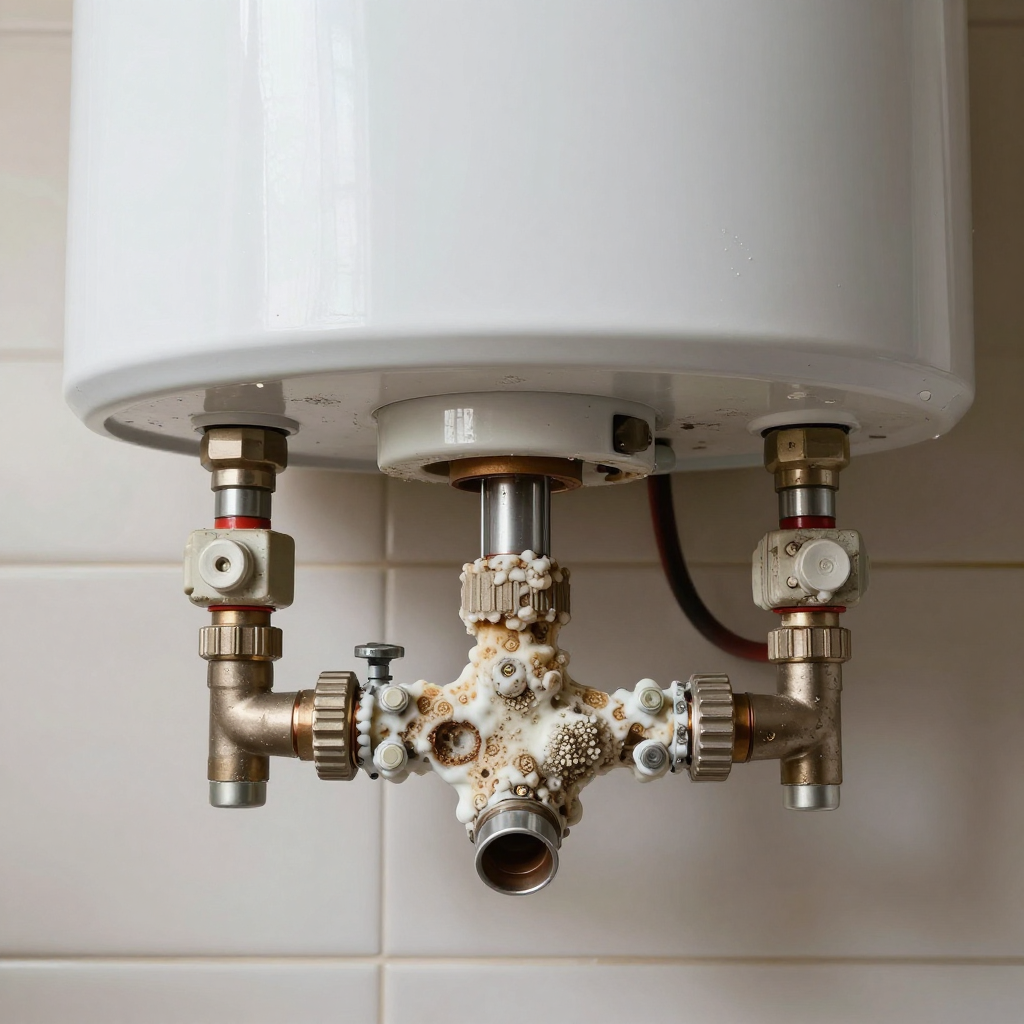
Hard water can reduce water-heater performance when calcium carbonate deposits collect inside a tank or coat an electric heating element. These deposits can increase heating time and create additional maintenance problems.
In a storage water heater, minerals may settle at the bottom of the tank as sediment-like scale. Gas burners then heat through a less efficient layer, while electric elements can become coated with a hard crust. The heater may need to run longer to transfer the same amount of heat, although the actual effect depends on deposit thickness, heater design, temperature, and water usage.
Scale can also contribute to popping, crackling, or rumbling sounds as water moves through deposits near a heating surface. These sounds do not prove that the heater is failing, but they are a useful reason to check the manufacturer’s maintenance instructions.
- Flush a tank-style water heater only when the manufacturer’s guidance and equipment condition make it appropriate.
- Have a qualified professional inspect heavily scaled equipment, especially if the unit is old or the drain valve has not been used for years.
- Do not assume a water softener will remove scale that already blocks a component; softening helps limit new deposits but does not automatically dissolve established buildup.
Tankless water heaters also need attention. Their narrow heat exchangers can be sensitive to scale, so many manufacturers specify periodic descaling. Follow the service interval for the exact model rather than using a universal schedule.
How Hard Water Affects Household Appliances
Hard water affects dishwashers, washing machines, coffee makers, and other water-using appliances by leaving scale on internal parts and surfaces. The most noticeable results are reduced cleaning performance, longer heating cycles, residue, and more frequent descaling.
Dishwashers
In a dishwasher, minerals can collect on spray arms, filters, heating elements, and the tub. Glassware may emerge cloudy or covered with white spots, while detergent residue and food soil can become harder to rinse away. Rinse aid can reduce spotting, but it does not remove the underlying hardness.
Check the spray arms and filter for deposits, and use a dishwasher cleaner approved for the appliance. If the manufacturer provides a water-hardness setting or recommends a specific detergent strategy, use that guidance.
Washing machines
A washing machine may develop scale around the water inlet valve, heating element, dispenser, and drum components. Hard water can also make detergent less effective because calcium and magnesium react with some soap ingredients, leaving more residue on fabrics or inside the machine.
High-efficiency washers use less water, so detergent dosing matters. Adding extra detergent is not a reliable fix and may create more buildup. Clean the dispenser and run the manufacturer-recommended maintenance cycle.
Coffee makers and smaller appliances
Coffee makers, kettles, humidifiers, ice makers, and steam appliances often show hard-water effects quickly because they heat or evaporate water repeatedly. Scale can restrict narrow tubes, alter heating behavior, and affect taste or output.
Use the cleaning product and frequency specified by the manufacturer. Some appliances permit diluted citric acid; others warn against vinegar or acidic cleaners. Choosing a softener for the whole home means less hardness enters these devices, but appliance cleaning remains necessary.
Signs Your Home May Have Hard-Water Problems
Common signs of hard-water problems include white deposits, recurring fixture blockages, cloudy dishes, and changes in appliance performance. A single symptom is not conclusive, but several appearing together justify testing the water.
- White or chalky rings around faucets, drains, shower doors, or kettle interiors.
- Faucet aerators and showerhead openings that clog repeatedly after cleaning.
- Reduced flow from one fixture or several fixtures, particularly in an older plumbing system.
- Cloudy glassware or white spots after dishwasher cycles.
- Crackling or rumbling from a tank water heater, or visibly scaled heating elements.
- Longer heating cycles, inconsistent hot-water output, or more frequent appliance descaling.
- Soap that lathers poorly and a persistent film on fixtures, although these signs can also reflect cleaning products or water chemistry.
Testing is the most dependable next step. Compare a certified test result with your local water report, and remember that hardness is only one part of water chemistry. Iron, acidity, sediment, and high temperature can create different plumbing problems or intensify scale formation.
How a Water Softener Helps Protect Plumbing and Appliances
A water softener helps reduce hard-water effects by exchanging calcium and magnesium ions for sodium or potassium ions before the water enters household plumbing. Lower mineral hardness can limit new limescale formation in pipes, fixtures, water heaters, and appliances.
Conventional ion-exchange softeners use a resin tank, a brine tank, and a control valve. During regeneration, the system flushes accumulated minerals from the resin. Capacity, salt use, regeneration frequency, and installation requirements vary by water hardness and household consumption.
Softening is best understood as prevention rather than repair. It may help protect a clean or recently serviced system from additional scale, but it cannot restore a pipe’s original diameter or repair a damaged faucet cartridge. Existing deposits may still need manual cleaning, component replacement, or professional descaling.
Choosing soft water for reduced scale means accepting trade-offs. A salt-based system needs salt, electricity or control maintenance, a drain connection, and periodic servicing. Some homes may instead use a targeted treatment, such as a point-of-use filter or manufacturer-approved scale-control device, but these options do not provide the same type of mineral removal throughout the home.
Before purchasing, test hardness, estimate daily water use, check installation space, and review local discharge or plumbing requirements. The U.S. Environmental Protection Agency’s WaterSense program provides broader guidance on efficient household water use, although it does not replace product-specific softener advice.
Maintenance and Prevention Tips
Preventing hard-water damage requires a combination of testing, routine cleaning, appliance descaling, and appropriate treatment. A water softener can reduce incoming hardness, while maintenance addresses deposits that are already present.
- Test before treating. Use a reliable water-hardness test and record the result. Include other concerns, such as iron or sediment, when selecting equipment.
- Clean fixtures regularly. Remove faucet aerators and showerheads when safe to do so, then follow the fixture manufacturer’s instructions for descaling.
- Descale appliances on schedule. Use approved cleaners for coffee makers, dishwashers, tankless water heaters, and other devices. Never combine cleaning chemicals.
- Follow equipment manuals. Manufacturer guidance controls the correct cleaner, temperature, rinse cycle, softener setting, and service interval.
- Inspect the water heater. Look for unusual noises, slow recovery, leaks, or inconsistent hot water. Arrange professional service when flushing or opening the unit may be risky.
- Maintain the softener. Keep the brine tank supplied as directed, check for salt bridging, replace filters if fitted, and verify that regeneration occurs correctly.
- Investigate low pressure properly. Check fixture screens and pressure readings, but call a plumber when the restriction affects multiple outlets or occurs with leaks and discoloration.
One common mistake is increasing detergent to overcome hard water. This may leave more residue and does not remove mineral scale. Another is installing an oversized softener: excess capacity can increase purchase cost and may lead to inefficient regeneration. Correct sizing and realistic maintenance expectations matter more than choosing the largest model.
Frequently Asked Questions
Can hard water clog or damage plumbing pipes?
Hard water can contribute to restricted plumbing by forming limescale inside pipes, valves, aerators, and fixtures. It usually develops gradually, and low flow may also result from corrosion, sediment, or a failing pressure regulator.
Which appliances are most affected by hard water?
Water heaters, dishwashers, washing machines, coffee makers, kettles, humidifiers, and tankless heaters are common targets because they heat, evaporate, or repeatedly circulate water.
Does hard water reduce water-heater efficiency?
Mineral deposits can reduce heat transfer and increase heating time, particularly when scale coats a heating element or collects at the bottom of a tank. The size of the effect depends on the heater and amount of buildup.
Can a water softener prevent limescale buildup?
A properly sized and maintained ion-exchange water softener can substantially reduce calcium and magnesium entering the home, which helps limit new limescale. It does not automatically remove existing deposits or fix damaged components.
How can I tell whether my home has hard water?
Look for recurring white deposits, clogged aerators, cloudy dishes, poor soap lather, and appliance scale, then confirm with a water-hardness test or a local laboratory report.