Maintenance Tips for Keeping Your Water Softener in Top Condition
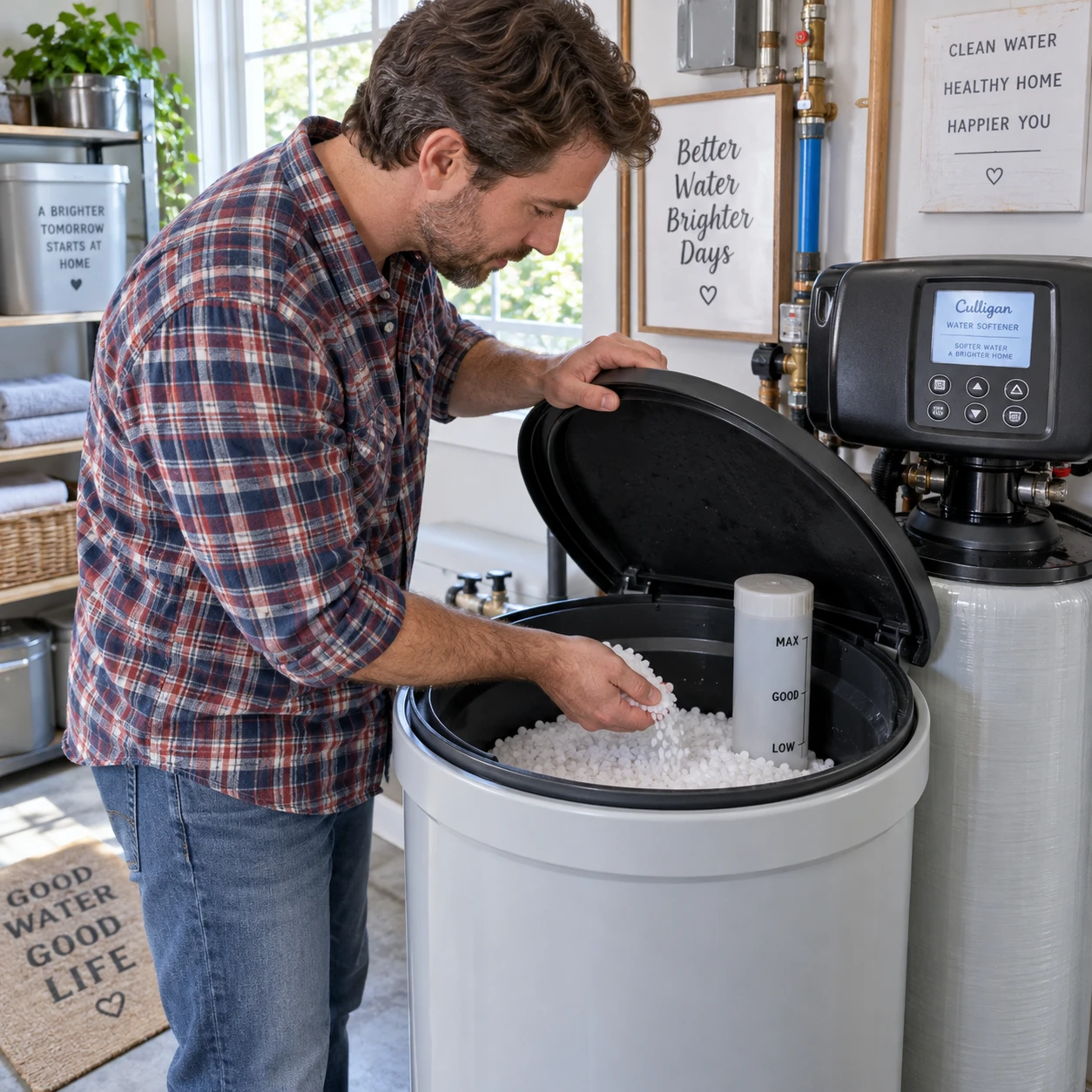
Routine maintenance helps a water softener deliver reliably softened water and makes it easier to spot problems before they disrupt the system. Most checks are simple: inspect the salt, look inside the brine tank, and pay attention to changes in water hardness or regeneration.
Exact maintenance needs vary by model, household water use, and water quality. Use these practical checks as a starting point, and follow the manufacturer’s instructions for cleaning, settings, and service.
Know the key parts of your water softener
A water softener removes hardness minerals through a resin bed, then restores that bed during a regeneration cycle. Knowing the main components helps you perform basic checks without attempting repairs that require a technician.
The resin bed is usually inside the system’s mineral tank. As hard water passes through it, the resin captures minerals such as calcium and magnesium. During regeneration, the control valve directs salty brine through the resin so it can continue softening water.
The brine tank holds water softener salt and the water used to make brine. The control valve manages water flow and regeneration, while the bypass valve lets you route water around the softener when needed, such as during certain maintenance tasks. Its position depends on the system and the task, so check the manual before operating it.
Most homeowners can inspect these visible parts, check for leaks, and confirm that settings look reasonable. Opening the control valve or handling the resin bed is a different matter. Those tasks may require model-specific procedures or professional service.
Check salt levels and refill the brine tank
Check the water softener salt regularly and refill the brine tank when the level is low, following the guidance for your model. Keeping an adequate supply supports regeneration, but filling the tank to the top can make inspection harder and may not suit every system.
As a practical habit, look at the salt every few weeks at first. Then adjust the interval based on how quickly your household uses it. A larger household or high water use may require more frequent checks; salt use also depends on the softener’s settings and water hardness.
Use the salt type recommended by the manufacturer. Common products include evaporated salt pellets and crystals, but not every softener accepts every form. Avoid using rock salt or products with additives unless the manual specifically approves them. The wrong product can leave more residue or cause feeding problems.
- Check the salt level without packing or pressing it down.
- Keep the level within the range recommended in the manual.
- Pour carefully to avoid spilling salt into the control valve or surrounding area.
- Record how quickly the level drops; a sudden change can help flag a setting or system issue.
There is no universal refill schedule. Your household’s use, incoming water hardness, and regeneration settings determine how quickly salt is consumed.
Look for salt bridges and brine tank buildup
A salt bridge is a hard crust that forms above an empty space in the brine tank, making the salt level look higher than it is. Check for a bridge if the tank appears to contain salt but the softener is not regenerating properly or softened water is no longer available.
To check, look for a firm, compacted layer across the salt. If the manual permits, gently probe the surface with a clean, blunt tool, taking care not to damage the tank or any internal components. A hollow area beneath a crust can indicate a bridge. Do not use a sharp tool or force anything near the brine well or float assembly.
Salt residue and sediment can also build up over time, particularly if the tank has been left with old salt or the wrong product. Some manufacturers recommend occasional brine tank cleaning; others provide different instructions. Follow the manual for draining, cleaning, and refilling, and do not add cleaners or other substances unless the manufacturer directs you to do so.
If a bridge returns often, or you see unusual water levels, sludge, or a damaged part, pause and contact the manufacturer or a qualified water-treatment professional. Repeated buildup may have a cause beyond routine housekeeping.
Keep the system and its settings in good shape
Keep the area around the water softener clean and dry, inspect visible connections for leaks, and confirm that its settings still match your household’s needs. Follow the manufacturer’s schedule for any cleaning or maintenance beyond these basic checks.
Make sure the unit has clear access and that stored items do not press against its plumbing or electrical connections. Look around the tanks and nearby floor for drips, salt residue, or moisture. A small leak may be easier to address before it damages nearby flooring or equipment.
Settings matter. The control valve may use a timer or meter to schedule the regeneration cycle, and some systems allow adjustment for water hardness. If your water source or household demand has changed, check whether the settings need updating. Use a recent water hardness test or the instructions from your water provider rather than guessing. Incorrect settings can lead to poor softening or unnecessary salt and water use.
Keep the manufacturer’s manual or model information accessible. It identifies the approved salt, explains the bypass valve, and gives the correct procedure for cleaning or changing settings. Avoid changing several settings at once; make one adjustment, note the original value, and observe the result.
Watch for signs your softener needs attention
Hard-feeling water, mineral spots, unusual salt use, or irregular regeneration can signal that a water softener needs attention. One symptom alone does not identify the cause, so check the simple possibilities before assuming a component has failed.
Possible warning signs include:
- Hard water returns: Soap may lather poorly, or spots may appear on dishes and fixtures. These signs can also have causes unrelated to the softener, so verify hardness if possible.
- Salt use changes: A sudden increase or a tank level that never seems to drop may point to a setting, brine, or control issue.
- Regeneration seems unusual: The system may regenerate too often, at an unexpected time, or not at all. Check the display and manual before changing settings.
- Water or salt residue appears around the unit: Inspect for visible leaks or spills and contact a professional if the source is unclear.
Compare symptoms with the softener’s recent behavior. For example, if softening stops after salt has run out, restoring the salt supply and following the manual’s regeneration instructions may resolve the issue. If the problem continues, further diagnosis may be needed.
Troubleshoot carefully and know when to call for help
Start troubleshooting with safe, visible checks: confirm the softener has power, check the salt level, look for an obvious salt bridge, and verify that the bypass valve is in its normal operating position. Use the manual for the correct position and any model-specific steps.
If the unit has a display, note any error code before resetting or changing settings. Check whether the time or hardness setting could have been changed after a power interruption. Don’t force the control valve, disconnect plumbing, or open sealed components to investigate an unknown problem.
Some systems allow a manual regeneration, but the procedure and timing vary. Run one only if the manufacturer’s instructions recommend it for the symptom you’re seeing. Frequent or repeated regeneration is not a reliable fix and may increase water and salt use without addressing the cause.
Contact the manufacturer or a qualified technician if the softener continues producing hard water after basic checks, leaks, displays a persistent error, or fails to complete regeneration. Seek professional help for electrical faults, damaged plumbing, control valve problems, or work involving the resin bed. Routine checks can prevent small issues from being missed, but they cannot replace diagnosis of internal faults.
Build a simple maintenance routine
A useful water softener maintenance routine combines regular visual checks with less frequent cleaning or service based on the manufacturer’s instructions. The right schedule depends on the model, salt use, water quality, and household demand.
- Every few weeks at first: Check the salt level and look for visible spills, leaks, or residue. Adjust the interval once you know how quickly your system uses salt.
- Periodically: Look for a salt bridge if the salt level seems misleading or softening changes. Check the display and confirm that the system is operating as expected.
- As the manual directs: Clean the brine tank, inspect or replace parts, and review settings. Avoid applying a schedule from another model.
- When symptoms appear: Record what changed, check the simple causes, and contact support if the issue persists.
A brief log of salt additions, regeneration issues, and water hardness checks can reveal patterns that are easy to miss. It also gives a technician useful information if service becomes necessary. Consistent, model-specific care is the safest way to keep a water softener working reliably.